
Why Calcium and Iron Supplements Don't Belong in the Same Glass
A landmark study showed that 600mg of calcium can cut iron absorption by up to 60%. Here's what the research found and what it means for your daily stack.
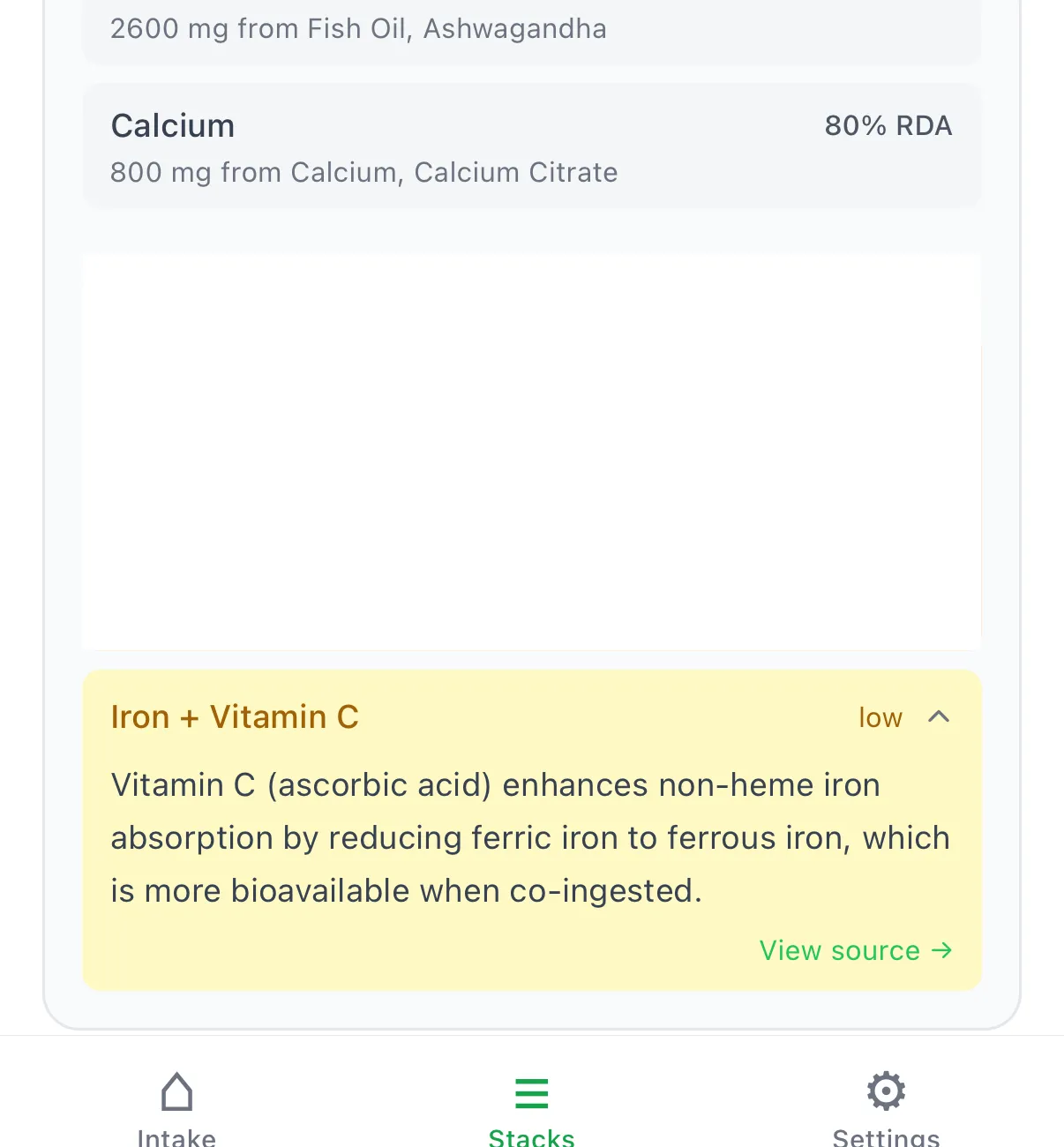
Flagged in Biostacks
Biostacks flags this automatically.
Add Calcium and Iron to your stack and Biostacks checks for this interaction in real time.
Most people who take both calcium and iron supplements assume they cancel each other out at worst. The reality, according to a body of clinical research, is more specific and more avoidable.
What the research measured
In 1991, a team led by Swedish nutrition researcher Leif Hallberg published results showing that calcium, at doses common in supplementation, significantly reduced the absorption of non-heme iron when both were consumed at the same meal. At 600mg of calcium, the reduction in iron absorption reached as high as 60%.
The finding was striking because it held across different calcium salts: calcium carbonate, calcium chloride, calcium citrate, and even calcium from milk. The mechanism was not specific to one formulation. Something about calcium itself disrupted iron uptake in the gut.
Heme iron, the form found in red meat and shellfish, was less affected. The interaction primarily hit non-heme iron, which is the form found in plant foods, fortified products, and most iron supplements.
Why this matters in practice
Iron deficiency is one of the most common nutritional deficiencies worldwide. It is especially prevalent among women of reproductive age, vegetarians, and regular blood donors. Many people in these groups take iron supplements specifically because their dietary intake is insufficient.
Calcium supplements, meanwhile, are widely taken for bone density, particularly by women over 40. It is not unusual for someone to be taking both, and to be taking them at the same time, typically with breakfast.
If the research is right, that common habit could be substantially undermining the point of the iron supplement. You might be absorbing 40% of what you thought you were getting.
A simple fix with meaningful results
The practical implication is straightforward. Taking calcium and iron supplements two or more hours apart eliminates the interaction. Iron is typically better absorbed on an empty stomach, while calcium is often taken with meals to reduce gastrointestinal discomfort.
Spacing them out by meal timing (iron in the morning, calcium in the evening) is one approach that fits naturally into most routines without requiring any change to dose.
Hallberg’s group subsequently confirmed that the effect was dose-dependent. Lower calcium intakes produced smaller reductions in iron absorption. But even moderate calcium doses in the 300–600mg range produced measurable effects.
A note on dietary sources
The same principle applies to food, not just supplements. Drinking a large glass of milk alongside an iron-rich meal or an iron supplement has the same dampening effect. This is relevant for vegetarians who rely on dairy as a protein source while also trying to maintain iron status from plant foods.
The interaction does not mean these minerals cannot be part of the same daily routine. It means the timing of that routine matters.
Reference
- Hallberg L, Rossander-Hulten L, Brune M, Gleerup A. "Calcium and iron absorption: mechanism of action and nutritional importance." European Journal of Clinical Nutrition, 1992. PubMed 1546794