
High Calcium Intake Reduces Zinc Absorption When Taken at the Same Time
Studies show calcium competes with zinc at intestinal absorption sites. The effect is dose-dependent and avoidable by spacing supplements two hours apart.
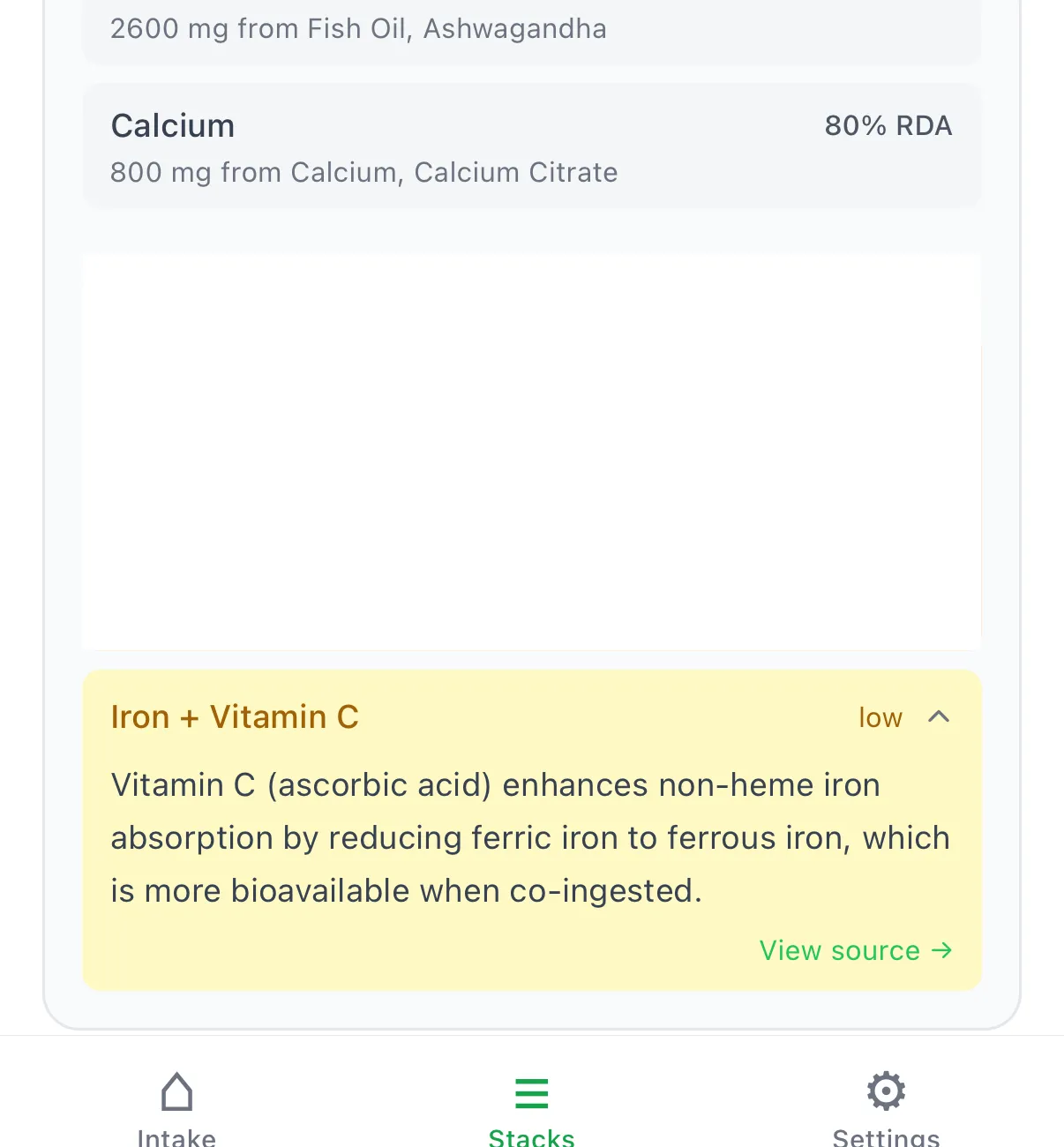
Flagged in Biostacks
Biostacks flags this automatically.
Add Calcium and Zinc to your stack and Biostacks checks for this interaction in real time.
Calcium is one of the most widely supplemented minerals. Zinc is increasingly taken for immune support, skin health, and general wellbeing. When both appear in the same formulation or are taken at the same time, a documented absorption competition becomes relevant.
The mechanism
Like the calcium-iron interaction, the calcium-zinc interaction occurs in the small intestine. Zinc absorption involves specific transport proteins, and calcium, particularly at high concentrations, can interfere with this process. The exact mechanism is not as clearly defined as the calcium-iron interaction, but it involves competition at the level of intestinal uptake.
Research by Wood and Zheng published in the 1990s found that high dietary calcium intakes were associated with reduced zinc absorption in human subjects. The effect was observed when calcium was provided as part of the same meal or at the same time as zinc.
The dose question
The interaction is dose-dependent. At typical supplemental calcium doses of 500mg or below, the effect on zinc absorption is modest. At 1,000mg or more (a dose common in osteoporosis supplementation), the reduction in zinc absorption becomes more meaningful.
For context, zinc absorption from a mixed diet runs at roughly 20–40% of intake. A significant calcium-induced reduction in that figure could meaningfully affect zinc status in people who are already not meeting their zinc needs through diet.
Who should pay attention
The interaction is most relevant for:
- Postmenopausal women taking 1,000–1,200mg calcium daily for bone density who are also supplementing zinc
- Older adults, who may have lower baseline zinc absorption efficiency and are more commonly on calcium supplementation
- Vegetarians and vegans, whose zinc intake from phytate-rich plant foods is already less bioavailable
A straightforward solution
Separating calcium and zinc supplements by two hours eliminates the intestinal competition. Since calcium is commonly taken with meals and zinc is often recommended on an empty stomach or with a light snack, natural meal timing often provides the needed separation without requiring a specific strategy.
As with calcium-iron and zinc-iron interactions, the message is not that these minerals cannot both be taken daily. It is that simultaneous high-dose co-ingestion is worth avoiding.
Reference
- Wood RJ, Zheng JJ. "High dietary calcium intakes reduce zinc absorption and balance in humans." American Journal of Clinical Nutrition, 1997. PubMed 8892174