
Vitamin C Dramatically Boosts the Iron You Absorb. Here's the Research
Combining vitamin C with non-heme iron at the same meal can double or triple absorption. A classic study explains the chemistry and how large the effect really is.
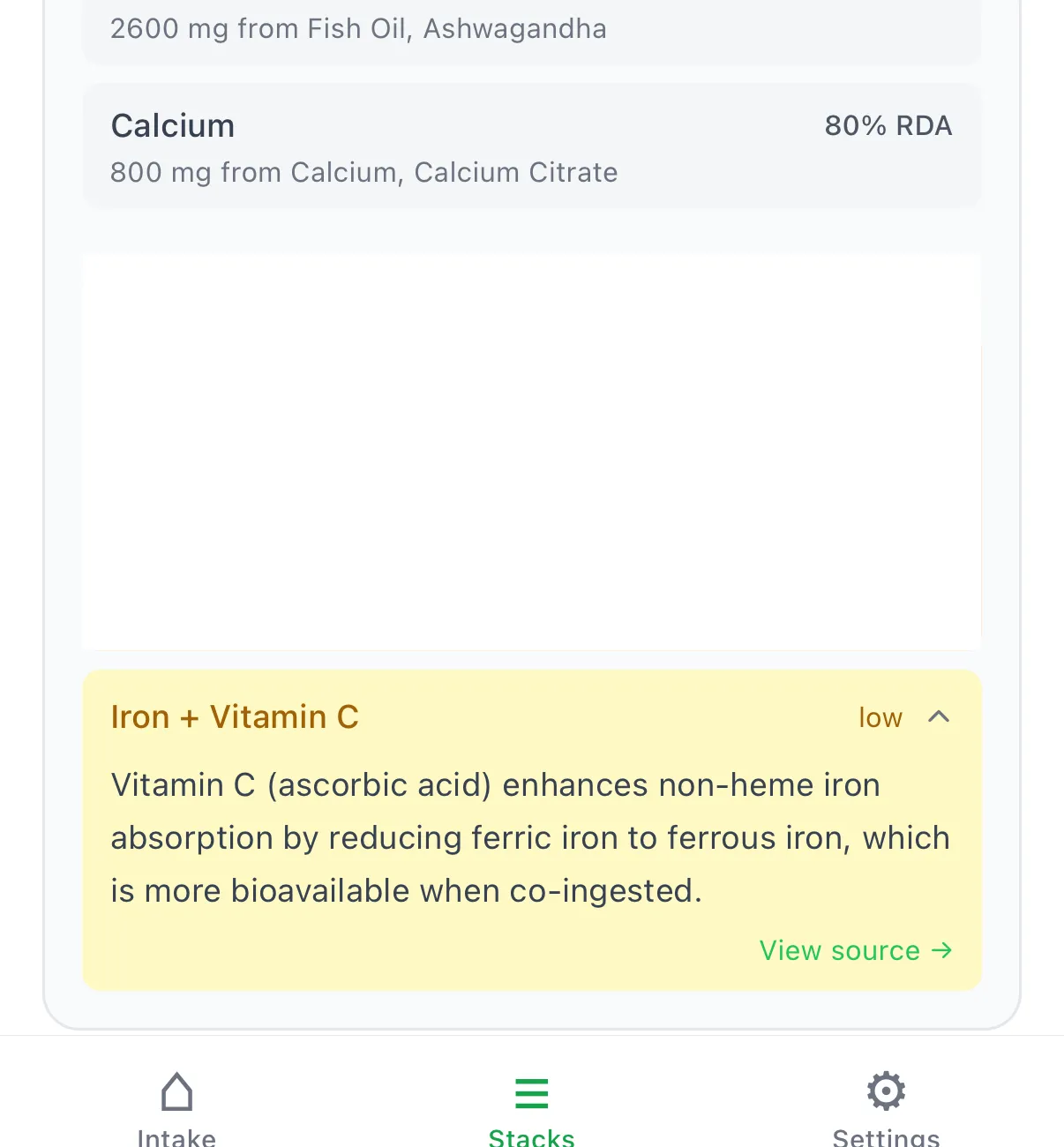
Flagged in Biostacks
Biostacks flags this automatically.
Add Zinc and Copper to your stack and Biostacks checks for this interaction in real time.
Not all supplement interactions are warnings. Some are the opposite: two nutrients that work meaningfully better together than apart. The combination of iron and vitamin C is among the most studied and best-supported examples.
The chemistry behind it
Iron in plant foods and supplements typically exists in the ferric form (Fe³+). The problem is that the intestinal lining absorbs iron primarily in the ferrous form (Fe²+). Vitamin C, also called ascorbic acid, reduces ferric iron to ferrous iron in the gut, making it available for absorption.
The conversion happens in the acidic environment of the stomach, and it is dose-dependent. The more vitamin C present at the time of iron ingestion, the more complete the conversion.
What the studies found
Research by Leif Hallberg’s group in Sweden quantified the effect with precision across multiple studies. In one widely cited paper, adding 25mg of vitamin C to an iron-containing meal approximately doubled iron absorption. At 50mg, the increase was greater still.
The enhancement was most pronounced for non-heme iron, which is the form found in plant foods, fortified cereals, and most iron supplements. Heme iron from meat is absorbed through a separate pathway and is less affected by co-ingestion with vitamin C.
The practical effect size is large enough to be clinically relevant. For someone struggling to maintain adequate iron status on a plant-based diet, taking an iron supplement with a glass of orange juice rather than water is not a minor detail.
Who benefits most
The effect matters most to:
- Vegetarians and vegans, who get all of their iron from non-heme sources
- People with diagnosed iron deficiency who are supplementing to rebuild stores
- Women with heavy menstrual periods who have chronically low iron
- Regular blood donors
For someone already eating significant amounts of heme iron from red meat and shellfish, the effect of added vitamin C is smaller, because a large share of their iron intake comes through the separate heme absorption pathway.
A practical note
Vitamin C is rapidly absorbed and excreted. For the enhancement effect to work, the two need to be ingested at the same time, not hours apart. Taking iron with a meal that includes tomatoes, citrus, or bell peppers achieves the same result without a second supplement.
The effect of vitamin C does not require large doses. Even 50–100mg, the amount in half a glass of orange juice, produces a meaningful boost. Megadose vitamin C, on the other hand, introduces its own interactions with other nutrients, particularly vitamin B12.
Reference
- Hallberg L, Brune M, Rossander L. "The role of vitamin C in iron absorption." International Journal for Vitamin and Nutrition Research, 1989. PubMed 2507689